
Designing the Course
Faculty are asked to design learning experiences and environments to engage learners. Even when some or all of the curriculum is written for us, faculty still make critical decisions about how and when to use parts of that curriculum to create personalized learning experiences to help students achieve their educational goals.
Below, you will find information about four High Impact Teaching Strategies (HITS): Setting Goals, Spaced Learning, Differentiated Learning, and Metacognitive Strategies. These HITS will help faculty develop their capacity as a Designer in the Designer and Teacher domain of the Teaching Excellence Framework.
*Please note that while Hattie and Marzano identified 10 HITS, we felt that two of them, "Structuring Lessons" and "Multiple Exposures" really embodied the concept of Spaced Learning, or Interleaving. These concepts can be found in the Spaced Learning section found below.
Setting Goals
Lessons have clear learning intentions with objectives that clarify what success looks like. Lesson objectives, always explain what students need to understand, and what they must be able to do. This helps the teacher to plan learning activities, and helps students understand what is required.
Setting Goals connects to the Design portion of the Designer and Teacher domain within the Teaching Excellence Framework. Specifically, setting goals is the first step one takes when building a lesson using backwards design. Backwards design means we: 1) Set goals to determine what objectives or goals that students will achieve; 2) determine acceptable pieces of evidence that will demonstrate that the objectives or goals have been met; and 3) plan lessons or activities that scaffold students' learning to the level of rigor required to produce the pieces of evidence needed to meet the objectives or goals that were set. When they use this strategy, faculty are adopting evidence-based instructional practices to improve student outcomes - a key component of the Designer and Teacher domain.
To set goals, one has to understand how to guide a novice into learning the rich material of their content area. This relates to Subject Matter Guide in the Teaching Excellence Framework, especially the action: Faculty guide students into their deep, evolving, and foundational knowledge in their content area.
This High Impact Teaching Strategy (HITS) can be explored deeper in Modules 2, 3, and 4 of the Center for Teaching and Learning Excellence HITS course in D2L.
Key Elements
- Lesson objectives are based on assessed student needs
- Lessons are aligned to learning objectives for the week that are aligned to CLOs so students know what they are intended to learn
- Lesson objectives can focus on surface and/or deep learning
- Lessons have objectives that challenge students relative to their current mastery of the topic
- Lesson objectives are aligned to learning assessments, which are linked to the learning objectives for the week

Example 1: Review Course Learning Outcomes Objectives (CLOs) and Module Learning Objectives (MLOs) that align with your Program Learning Outcomes (PLOs) and clearly describe measurable outcomes for face-to-face and/or online activities and assignments.
Example 2: When you present or post an activity, include an explanation of how the activity addresses Module Learning Objectives (MLOs) and associated Course Learning Objectives (CLOs). This can help students make connections between what they’re doing and course outcomes. Explain objectives in a way that allows learners, including non-native speakers, to easily understand the connection.
Example 3: If your course has synchronous and asynchronous meetings, consider the advantages and disadvantages of the two formats before establishing appropriate goals. For example, synchronous interactions are good for creating a sense of spontaneity and connection. On the other hand, asynchronous interactions encourage depth of reflection and more time to make well-researched arguments.
The primary objective of goal setting is to add guide posts for the learning process. Some advocate SMART goals, but their are other models as well. Please see the links below for a deeper dive on this topic.
Chan, Swann, C., & Donnelly, J. (2018). Are S.M.A.R.T goals really smart? The psychological effects of goal-setting in a learning task. Frontiers in Psychology, 9. https://doi.org/10.3389/conf.fpsyg.2018.74.00020 Link to Article in NLU Library
Day, T., & Tosey, P. (2011). Beyond SMART? A new framework for goal setting. Curriculum Journal, 22(4), 515–534. https://doi-org.nl.idm.oclc.org/10.1080/09585176.2011.627213 Link to Article in NLU Library
Nordengren. (2019). Goal-setting practices that support a learning culture. Phi Delta Kappan, 101(1), 18–23. https://doi.org/10.1177/0031721719871558 Link to Article in NLU Library
Werle Lee. (2010). Planning for success: setting SMART goals for study. British Journal of Midwifery, 18(11), 744–746. https://doi.org/10.12968/bjom.2010.18.11.79568 Link to Article in NLU Library
Spaced Learning
A lesson structure maps teaching and learning that occurs in class. Sound lesson structures reinforce routines, scaffold learning via specific steps/activities. They optimize time on task and classroom climate by using smooth transitions. Planned sequencing of teaching and learning activities stimulates and maintains engagement by linking lesson and unit learning. Within the Design portion of the Designer and Teacher domain of the Teaching Excellence Framework, Spaced Learning addresses the sub-domain related to faculty organizing and managing time, materials, technology, and physical and virtual space to facilitate learner engagement and outcome achievement.
Multiple exposures provide students with multiple opportunities to encounter, engage with, and elaborate on new knowledge and skills. Research demonstrates deep learning develops over time via multiple, spaced interactions with new knowledge and concepts. This may require spacing practice over several days, and using different activities to vary the interactions learners have with new knowledge.
Spaced learning theory emphasizes that students have time to practice what they have learned; that they return after time, ideally after they may have forgotten, to concepts and techniques they previously practiced; and timely feedback provides opportunities for immediate correction and improvement
This High Impact Teaching Strategy (HITS) can be explored deeper in Modules 2 and 4 of the Center for Teaching and Learning Excellence HITS course in D2L.
Key Elements
- Sequencing and linking learning - Think about where each lesson or activity fits in the learner's journey toward mastery. The activity should link to previous concepts and/or prepare students for the next concept.
- Scaffolding - Think about the steps one may take to learn a concept. Breaking down a larger concept into smaller pieces that build upon each other can make difficult concepts easier to master.
- Clear expectations - Set clear expectations for your lessons and activities. This should include the outcomes and deliverables to be submitted or presented.
- Clear instructions - Ensure that your instructions for each lesson are clear and concise. The learner should know what to do, how to do it, and what the finished product should look like.
- Clear transitions - Make it clear that you are moving to a new lesson (or when to move to the next lesson), how these two lessons are related, and how the new lesson advances their mastery of the concept.
- Questioning/feedback - Provide ample time for questions and feedback. When a student asks a question, solicit the answer from other students, rather than answering it immediately. Use follow-up questions to guide students to an answer collaboratively.
- Formative assessment - Use formal and informal assessments to guide student learning and modify teaching practices to improve student attainment of information.
- Exit tickets/slips - Use a wrap-up activity to summarize key points.
Example 1: Establish and communicate routines for active learner–instructor interactions, such as emails, announcements, and discussions.
Example 2: Sequence the classroom activities with different forms of learning such as learner–learner interactions (e.g., discussions, collaborative group work, peer review activities) and learner–content interactions (e.g., reading content, watching a video, or working through a problem set).
Example 3: Connect the mutually reinforcing learning activities that occur in two different settings based on a common thread or topic, and make the connection evident to learners. For example, the different parts of a specific activity might be alternately sequenced in the course's online and face-to-face meetings.
Example 4: Integrate online and in-person classroom activities and engagement to produce multiple, spaced interactions with new knowledge and concepts that allow students to develop a deeper understanding. For example, assign challenging and engaging online learning activities and then discuss them in person, inviting questions.
Example 5: Offer a variety of assignments that explore varying topics, while still requiring students to apply what they have learned in previous modules and classroom sessions.
Example 6: Plan your lesson using the Station Rotation Model. A station rotation model uses small groups for the purpose of interacting with the content in different ways. Each station may ask students to think about a key concept in a different way or under different circumstances. Alternatively, each station may explore a different theme of the same concept.
Example 7: Design a sequence of connected activities and assignments that will provide scaffolded learning experiences throughout the course. Sample:
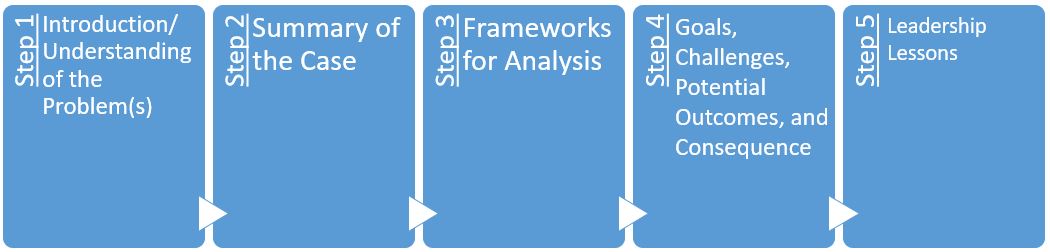
Spaced Learning theory or interleaving build upon a number of earlier theories, such as scaffolding, but emphasize the "power of forgetting." There is growing neurological research that indicates that our brains respond differently (leading to greater retention) when we visit concept A, move to another concept, and then revisit concept A. Dr. Sarma's book, Grasp, explores this. The videos next to his citation below include his discussion of the concepts explored in his book.
Arnab, Ger, P. M., Lim, T., Lameras, P., Hendrix, M., Kiili, K., Hauge, J. B., Ninaus, M., de Freitas, S., Mazzetti, A., Dahlbom, A., Degano, C., Stanescu, I., & Riveiro, M. (2015). A Conceptual Model Towards the Scaffolding of Learning Experience. In Games and Learning Alliance (pp. 83–96). Springer International Publishing. https://doi.org/10.1007/978-3-319-22960-7_9 Link to chapter in NLU Library
Chen, O., Paas, F., & Sweller, J. (2021). Spacing and Interleaving Effects Require Distinct Theoretical Bases: a Systematic Review Testing the Cognitive Load and Discriminative-Contrast Hypotheses. Educational Psychology Review, 33(4), 1499–1522. Chen (2021) Spacing and Interleaving PDF recovered on 5/16/2022 from https://repository.lboro.ac.uk/articles/journal_contribution/Spacing_and_interleaving_effects_require_distinct_theoretical_bases_a_systematic_review_testing_the_cognitive_load_and_discriminative-contrast_hypotheses/14315435
Huertas-Bustos, A., López-Vargas, O., & Sanabria-Rodríguez, L. (2018). Effect of a Metacognitive Scaffolding on Information Web Search. Electronic Journal of E-Learning, 16(2), 91–106. Link to Article in NLU Library
McGee, P., & Reis, A. (2012). Blended Course Design: A Synthesis of Best Practices. Journal of Asynchronous Learning Networks, 16(4), 7–22. McGee (2012) Blended Course Design PDF retrieved on 5/16/22 from http://eric.ed.gov/?id=EJ982678
O’Connor, E., McDonald, F., & Ruggiero, M. (2014). Scaffolding Complex Learning: Integrating 21st Century Thinking, Emerging Technologies, and Dynamic Design and Assessment to Expand Learning and Communication Opportunities. Journal of Educational Technology Systems, 43(2), 199–226. O'Connor (2014) Scaffolding Complex Learning PDF retrieved on 5/16/22 from https://citeseerx.ist.psu.edu/viewdoc/download?doi=10.1.1.922.5075&rep=rep1&type=pdf
Mamun, M. A. A., Lawrie, G., & Wright, T. (2020). Instructional design of scaffolded online learning modules for self-directed and inquiry-based learning environments. Computers & Education, 144, N.PAG. Full text at Wheeling campus. Click here to check availability: https://nl.idm.oclc.org/login?url=https://search.ebscohost.com/login.aspx?direct=true&db=eue&AN=140984721&site=ehost-live&scope=site
Sarma, S. E., & Yoquinto, L. (2021). Grasp: The Science Transforming How We Learn. Anchor Books. Keynote discussing his book. | xTalk discussing Grasp
Swan, A. K., Sleeter, N. M., & Schrum, K. (2019). Teaching Hidden History: A Case Study of Dialogic Scaffolding in a Hybrid Graduate Course. International Journal for the Scholarship of Teaching and Learning, 13(1). Link to Article in NLU Library
Wood, D. J., Bruner, J. S. and Ross, G. (1976). The role of tutoring in problem solving. Journal of Child Psychiatry and Psychology, 17(2), 89-100. Link to article
Differentiated Learning
Differentiated teaching are methods teachers use to extend the knowledge and skills of every student in every class, regardless of their starting point. The objective is to lift the performance of all students, including those who are falling behind and those ahead of year level expectations. To ensure all students master objectives, effective teachers plan lessons that incorporate adjustments for content, process, and product.
There are a number of ways to meet students where they are at and find creative ways to engage and support them. Two key elements of differentiated learning are identified in the Designer and Teacher domain of the Teaching Excellence Framework: First, faculty design learning experiences to motivate students to be active participants in their learning; and second, faculty experiment with and employ technology to increase learner achievement and engagement.
This High Impact Teaching Strategy (HITS) can be explored deeper in Modules 4 and 5 of the Center for Teaching and Learning Excellence HITS course in D2L.
Key Elements
- High quality, evidence-based group instruction
- Regular supplemental instruction
- Individualized interventions
Example 1: Create a learner-centered environment by allowing students to choose how they engage with the content, present their work, and the modality in which they present/share their work. In other words, provide learners the opportunity to engage with their preferred forms of learning materials and present their work in a variety of formats rather than restricting it to the form of a written paper. (Note: Check your rubric first! It may have criteria related to the deliverable's format.)
Example 2: Utilize Retain progress reports to ensure individual student success by monitoring their learning progress and achievement. Retain reports will serve as a student's learning history data, allowing instructors and advisors to respond to individual students' concerns and communicate with them by providing care and support. Often, we can learn the best ways to connect with students by reviewing Retain reports from coaches, advisors, or other instructors.
Example 3: Create a space for students to reflect on their learning and assess their understanding through discussion board questions or reflection papers.
Example 4: Self-assessments or peer-assessments offer a low stakes way to reflect on learning and assess their understanding.
Example 5: Release differentiated materials to students based on assignment feedback or progress. This way, students who need more help on a topic can receive that help, while students who have a firm grasp can be challenged appropriately.
You may have heard the phrase "meet someone where they are at." To this we should add, "everyone may need a different path to get there." These concepts summarize differentiated learning. As educators, we need to assess the learning styles and strategies that are going to be most effective for each learner; then, we need to tailor our approach - and offer different kinds of support - to ensure each learner can achieve their goals.
Boelens, R., Voet, M., & De Wever, B. (2018). The design of blended learning in response to student diversity in higher education: Instructors’ views and use of differentiated instruction in blended learning. Computers & Education, 120, 197–212. Available at Wheeling Library. Check availability using this link
Osifo, A. (2019). Improving Collaboration in Blended Learning Environments through Differentiated Activities and Mobile-Assisted Language Learning Tools. International Association for Development of the Information Society. Link to PDF in NLU Library
Szafir, D., & Mutlu, B. (2013, April). ARTFul: adaptive review technology for flipped learning. In Proceedings of the SIGCHI Conference on Human Factors in Computing Systems (pp. 1001-1010). Link to PDF retrieved on 5/16/22 from http://pages.cs.wisc.edu/~bilge/pubs/2013/CHI13-Szafir.pdf
Tomlinson, C.A. (2014). The Differentiated Classroom: Responding to the Needs of All Learners: Vol. 2nd ed. ASCD. Link to PDF in NLU Library
Metacognitive Strategies
Metacognitive strategies teach students to think about their own thinking. When students become aware of the learning process, they gain control over their learning. Metacognition extends to self-regulation, or managing one’s own motivation toward learning. Metacognitive activities can include planning how to approach learning tasks, evaluating progress, and monitoring comprehension.
Helping students gain awareness about the metacognitive strategies of planning, evaluating, and monitoring of their own learning is the first step in helping motivate students to be active participants in their learning - which is an important component of the Designer and Teacher domain of the Teaching Excellence Framework. Additionally, it’s important that we model to students how people think about problems that arise in the discipline and ultimately the workplace. When we model this to students, we’re helping them develop the metacognitive skills necessary to be a successful, independent problem-solver. Modeling this maps to the Subject Matter Guide domain of the Teaching Excellence Framework: Faculty model to students the way a practitioner solves problems and applies the discipline’s skills and knowledge in a professional setting. Further, by explicitly sharing how we investigate the impact of our teaching, reflect, and make changes in real time, we can model our own metacognitive strategies for students (another component of the Designer and Teacher domain).
This High Impact Teaching Strategy (HITS) can be explored deeper in Module 2 of the Center for Teaching and Learning Excellence HITS course in D2L.
Key Elements
- Metacognitive Strategies:
- Teach problem solving
- Teach study skills
- Promote self-questioning
- Classroom discussion is an essential feature of Metacognitive Strategies
- Use of concept mapping is an excellent way to introduce Metacognitive Strategies
Example 1: Ask students to create project plans for milestone or signature assignments. This could include timelines, how they plan to approach learning key concepts, a progress evaluation component, and process reflection.
Example 2: Encourage students to reflect on their thought process at the end of an assignment. Examples: What made the assignment easier/harder? What influences did they draw upon to complete the assignment?
Example 2: Build a few questions that promote meta-cognition into classroom norms and encourage students to use these regularly. Examples: What about my history or experience is leading me to this conclusion? Who did I learn this from, and what were that person’s potential biases? What am I bringing to class today that is helping me be or preventing me from being invested?
Schön, D. A. (1984). The architectural studio as an exemplar of education for reflection-in-action. Journal of Architectural Education, 38(1), 2-9. Link to PDF Retrieved on 5/19/22 from https://www.jstor.org/stable/pdf/1424770.pdf